
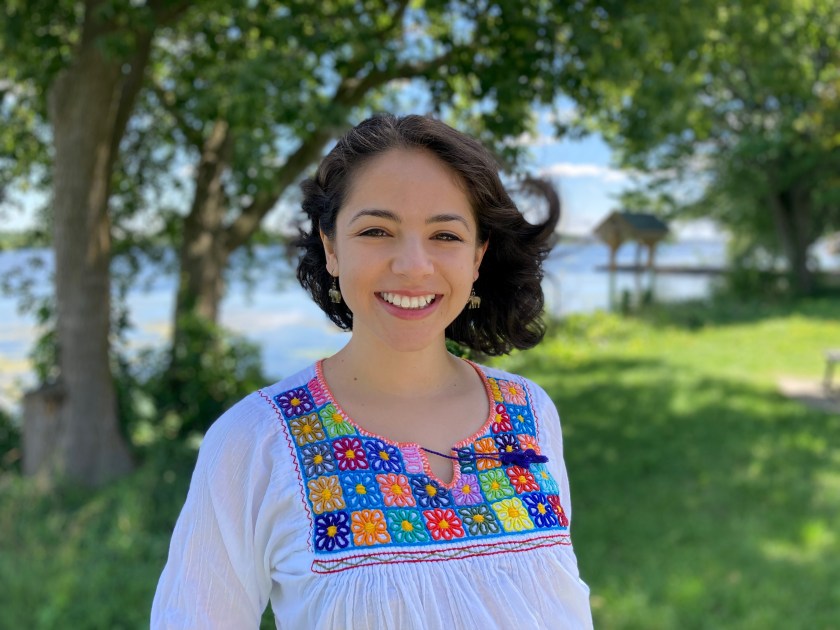
Inspired by Abaya Yalan (Latin American) Feminist and Queer social movements, I am passionate about transforming clinical psychology practice and training to embrace diverse gender, sexual, and cultural embodiments.
As a queer Mexican-Canadian cisgender white woman and an uninvited first-generation settler on the traditional lands of the Mississaugas of the Credit, Huron-Wendat, and Seneca, I lead and support projects that focus on hermeneutical responsibility, relational ethics, and participatory methods. I draw from Critical Pedagogy, Transgender Studies, and Narrative approaches in my work.
I was first introduced to critical theories by my brilliant mentors Dr. Lee Airton and Dr. Michelle Searle during my Master of Education degree at Queen’s University (Katarokwi). I am continuing my journey into critical psychology under the compassionate and irreplaceable supervision of Dr. Maria Gurevich at the SHiFT Lab.
Continue reading “Sofia I. Melendez Ron (they/she)”

 Amanda Jenkins is a PhD Candidate in the Applied Social Psychology program at the University of Guelph, Canada under the supervision of Dr. Kieran O’Doherty. Her research focuses on women’s use and practices of vaginal cleansing products (douches, deodorants, wipes, powders, washes) and the broader marketing of these products to women from a critical feminist perspective. Marketing emphasizes the ‘clean and fresh’ vagina promoting product use as necessary to ‘control’ and ‘eliminate’ vaginal odour and discharge. The marketing of these products and the internalization of these messages by women reflects socio-cultural constructions of women’s genitalia as dirty and problematic.
  Dante Raymond Bazard Jr obtained his Bachelor of Arts in Psychology at the University of Prince Edward Island. During his third year he became interested in critical psychology through his interest in institutional power structures and discrimination. Through this research he met his academic advisor Colleen MacQuarrie and started working on presentations and round table discussion with other students. These sessions were focused on discussing various social issues such as patriarchy and feminism, racial discrimination, and the effects of mass incarceration.
  Nicole Jeffrey is a PhD candidate in Applied Social Psychology at the University of Guelph and is working under the supervision of Dr. Paula Barata. She primarily uses qualitative and critical psychological approaches to study men’s violence against women, including sexual and intimate partner violence and rape culture on university campuses. At the beginning of her graduate degree, Nicole felt limited by mainstream psychological and quantitative approaches to understanding the world. Critical and qualitative approaches have allowed her to orient her research towards social justice and have challenged her personally and professionally to understand the world and human behaviour more openly and critically.
 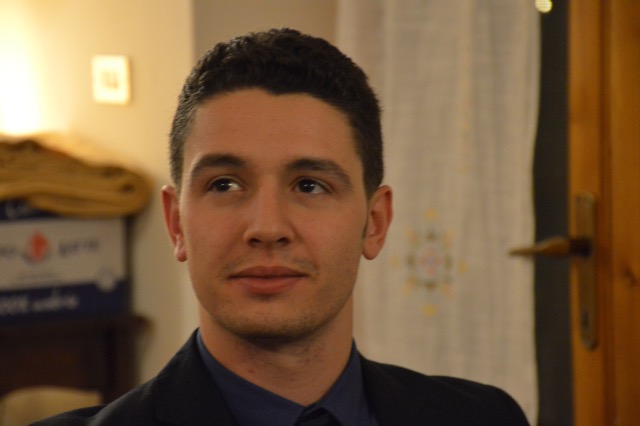 Filippo is a Ph.D. student at the Institute for the History and Philosophy of Science and Technology (IHPST) at University of Toronto. His research focuses on the history of psychological and psychiatric disciplines in 19th century Europe and North America. He works within the broad framework of the «history of normality in the West», looking at the production of scientific theories and instruments that proposed to demarcate what was considered normal or pathological in a specific period and context. In particular, he is interested in how the emerging disciplines of statistics, moral psychology, and phrenology offered normative criteria for understanding and explaining mental alienation.
  Amy Brown-Bowers is a clinical psychologist and graduate of the PhD program in Clinical Psychology at Ryerson University with primary research interests in critical psychological approaches to understanding health, gender and sexuality.
  Emily Thomas, B.A. Hons. (St. Thomas University, 2014), is a graduate student in the Sexuality Hub: Integrating Feminist Theory (SHiFT) lab, supervised by Dr. Maria Gurevich. She is currently finishing her Masters in Clinical Psychology at Ryerson University and will be continuing in the PhD program in the fall. Her current research adopts a discourse analytic approach to challenge taken for granted assumptions about sex and to explore women’s accounts of what counts as sex, what makes for good and bad sex, and how consent and desire are negotiated both psychologically and relationally.
  Susannah Mulvale is a PhD student at York University’s History and Theory of Psychology program and is working under the supervision of Dr. Thomas Teo and Dr. Alexandra Rutherford. Her research focus is on how philosophy, especially the phenomenological and postmodern traditions, can be used to enhance empirical psychology by providing theoretical and critical understandings of subjectivity.
  Critical Psychology Network